November 27, 2009

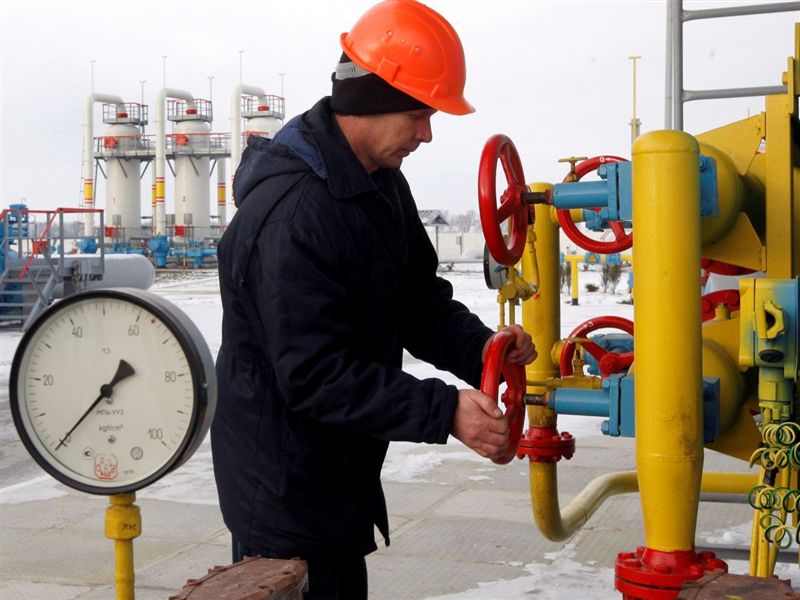
Ukraine's orange advance

My newest article for Novaja Europa:

Ukraine's orange advance


These days have been the fifth anniversary of the the Orange Revolution in Ukraine - an event that has for several years shaped the political life in neighbouring Belarus and Russia. The orange color has since then
irrevocably obtained a political sense.

Presidential elections in Ukraine of 2004 have turned to a play with a happy ending: a handsome, intelligent, positive Ukrainian-speaking Viktor Yushchenko has in a tense struggle won against the criminal, negative, bad-mannered Russian-speaking Viktor Yanukovych. The actors have picked up stereotypical roles and performed them on stage of the Ukrainian Maidan Nezalezhnosti square live on TV: tense hours and days of the struggle for vote counts, revoting, week-long concerts, demonstrations, the legendary victorious fight of Klitschko wearing an orange ribbon on his shorts, Yuliya Tymoshenko wearing the orange shirt of Shakhtar Donetsk. For many years Belarus and Russia's public political lifes haven't been giving us such a spectacle and the sense that the fate of the country could be decided by ordniary people. The forgotten taste of democracy once again, for only one month, came to our already Soviet-styled dissident lifes.

Supporters of democracy in Belarus and in Russia have perceived Ukraine's Orange Revolution much more emotionally than the Rose Revolution in Georgia a year before that. Georgia was a distant and strange country while Ukraine was here, so close and seemingly similar to us. Many of us watched the developments on the Independence Square via the Internet, came to demonstrations at the Embassy of Ukraine. The Revolution gave a burst of democratic activity in Belarus and Russia. In Belarus this wave broke in late March 2006. In Russia it has faded after several hopelessly undemocratic elections.

After five years, and in anticipation of the Yushchenko's upcoming resignation, we all ask ourselves whether the Orange Revolution has brought Ukraine what we wanted.

Unfortunately, Ukraine did not have its own Mikheil Saakashvili who would have used the window of opportunity for radical reforms and a radical improvement. Coming to power on a wave of enthusiasm, Viktor Yushchenko turned out to be not strong enough, and thus the moment of his election remains the most vivid event of his presidency.

Last five years in Ukraine were marked by infinite tense parliamentary battles, which are being so joyfully mocked by Russian and Belarusian official propagandists. Ukraine kept sinking in corruption, the economy landed in severe crisis. Ukraine has a democracy and poverty, Belarus and Russia are authoritarian and until recently had the dubious illusion of prosperity, which is now disappearing in Belarus. What is better? Ukrainian democratic government works badly. But at least it obeys the Constitution.

Indeed, the strengthening of an effective pluralistic democracy in Ukraine brought to light the overall lack of political culture: the inability to conduct a civilized dialogue between different political parties, the inability to compromise and generate solutions, the readiness to sabotage the functioning of the state. The fact that these phenomena have now so clearly broken out in Ukraine is in the long run still better than the situation in Belarus and Russia. In these autoritarian countries a democratic political culture is not developing at all.

Ukraine shows us the long path we still have before us to reach civilized political standards. While Ukraine is walking this path and while Ukrainians are learning from their mistakes - we have not even started to move. The way the Ukrainian parliament looks today is the way a democratic Belarusian parliament will look in ten years from now. What Western Europeans are trying to teach the Ukrainians now will be what Ukrainians themselves will be teaching us in ten years from now.

Ukraine has managed to avoid what has happened to Russia and Belarus. Censorship and propaganda on television, repressions against the opposition and shamelessly organized vote rigging - five years ago these methods of politics have been clearly set off the agenda in the Ukraine. Our neighbours have passed the test which Belarus failed in 1996.

During these 5 years Russia has finally turned into a sad example of a corrupt authoritarian petro-state, having buried expectations caused by the first relatively promising years of Putin's rule. During these 5 years Belarus has experienced the collapse of hopes for a democratic change in 2006 and was forced to start transformation of its authoritarian regime, for which the Orange Ukraine soon became an important partner and a bridge to the West.

Authoritarianism is ineffective and therefore short-lived and unsustainable. We see it in Belarus, where the existing system of governance has exhausted itself. Sooner or later Russia's rulers will face a similar destiny, perhaps with the same consequences as last time, when a late understanding ended by the collapse of the Soviet Union.

In many ways Ukraine is now more stable state than Belarus or Russia. At least because the question "What will happen after Yushchenko is gone" does not contain this threatening uncertainty as the questions "what will happen after Lukashenka is gone" or "after Putin is gone". Heaven will not fall on earth, the country will not disintegrate, the will be no more revolutions. Yushchenko's victory gave Ukraine additional five years of crystallization of a pluralistic democracy, and none of the current political actors is strong enough to get the country under an authoritarian rule.

On the eve of the presidential elections in 2010 the disposition looks somewhat like a race between Yuliya Tymoshenko and and Viktor Yanukovych. Ironically, but watching Tymashenko's happy chat with Putin automatically makes one wish Viktor Yanukovych, Yushchenko's antagonist five years ago, to be the winner. It will be funny if he actually wins this election. But this victory will not be what it would be in 2004. The country is not the Ukraine of 2004 and well as Viktor Yanukovych is not himself of 2004 any more.


http://n-europe.eu/article/2009/11/27/aranzhavy_avans_ukraine

October 30, 2009

Nord-Ost: Terror in Moscow

The Moscow theatre hostage crisis, also known as the 2002 Nord-Ost siege, was the seizure of a crowded Moscow theatre on October 23, 2002 by about 40-50 armed Chechen terrorists who claimed allegiance to the separatist movement in Chechnya. They took 850 hostages and demanded the withdrawal of Russian forces from Chechnya and an end to the Second Chechen War. The siege was officially led by Movsar Barayev (aged 25).

After a two-and-a-half day siege, Russian Spetsnaz forces pumped an unknown chemical agent into the building's ventilation system and raided it. Officially, 39 of the terrorists were killed by Russian forces, along with at least 129 and possibly many more of the hostages (including nine foreigners). All but a few of the hostages who died during the siege were killed by the toxic substance pumped into the theatre to subdue the militants.

// Wikipedia


A good and terrifying western documentary about a tragedy do truly Russian: after a successful police operation the - already freed! - people died simply because they were not given the right treatment.

October 21, 2009

Forbidden to forbid: Georgia as Field for a Macroeconomic Experiment

The idea to protect economic freedoms on a constitutional level has for the first time been thoroughly formulated in the post-Soviet region by the Belarusian economist Jaraslau Ramanchuk. In 2007 he presented the project of an Economic Constitution of Belarus[1]. This document was supposed to supplement the country's Constitution in terms of economic policy and to guarantee economic freedom for the citizens and limitations for government intervention in the economy on the constitutional level. This may look as an interesting, but utopian intellectual project for Belarus, but in Georgia it will soon be reality.

A liberal economic regime guaranteed by Constitution

Georgian President Mikheil Saakashvili proposes to protect and expand the country's liberal economic regime on the constitutional level. According to the Act on Economic Freedom and the relevant amendments to the Constitution, a draft of which he introduced to the Parliament on October 6. If passed, the new legislative acts will set limits on the size of government expenditures and public debt, prohibit the imposition of additional licensing and other restrictions on economic activity of private entities.

Besides that, it will be forbidden for the Georgian state to own shares in banks and put restrictions on convertation of the national currency or movements of capital. Any tax increase will have to be approved on a national referendum [2].

Given that the pro-presidential party has a constitutional majority in the parliament, the Act and the amendments to the Constitution are likely to be passed.


Georgia's success under Saakashvili

Just like any politician, Mikheil Saakashvili can be criticized for many things: for an authoritarian domestic policy, maybe for lack of flexibility and diplomatism in foreign policy (although it is difficult to imagine what a president of Georgia could make in order to avoid the war with Russia in August 2008). Even this initiative and the way it has been announced has a fleur of PR and populism on it. But what no one is able to question is the scale of socio-economic progress achieved by Georgia under Saakashvili.

According to most international rankings, Georgia has one of the most attractive environment for business and for investors in the region (and even in the world). Having almost no natural resources or major industries from the Soviet era, in 2004-2008 the country showed an average annual GDP growth of 9.3% which is comparable to the rate for Belarus (10% in 2008, 8.2% in 2007, 9.9% in 2006) with its preferential prices for Russian raw materials, Soviet industrial legacy and manipulation with statistics.

The flow of foreign investment in Georgia has not stopped even after August 2008 (although it dropped to USD 226.1 million in the first half of 2009 to USD 1.143 billion for the same period of 2008). Economic losses of Russia from the war in the form of capitalization of Russian companies fall (a few tens of billions of dollars), the withdrawal of capital from the country (up to USD 20 billion) and the drop in Central Bank reserves (USD 16 billion) were much greater than the loss of Georgia, so the question of who has really lost that war is not a rhetorical one.

Now Saakashvili together with Kakha Bendukidze, the father of the Georgian economic reforms and co-author of the Act on Economic Freedom, have led the country to a major turning point, when the economic transformation is about to get a real deeply institutionalized character.


The essence of the planned economic transformation

The new reform will not simply allow Georgia to get immunity from leftist populist politicians, because forced redistribution of wealth will be more difficult. Mikheil Saakashvili has a chance to remain in history not as a man who lost the war in South Ossetia or returned control over Ajaria, a different separatist region. Saakashvili and Bendukidze are starting an interesting large-scale experiment, perhaps unprecedented in the economic history. For the first time a country of several millions people will try to move to quite a revolutionary socio-economic system, which differs significantly from the generally accepted model of a Keynesian economy.

It is difficult to blame the current global economic crisis on the free market as long as the modern state holds the key control over the economy through manipulation with interest rates, currency or the amount of money in circulation, or even more through direct participation in economic life. Bendukidze and Saakashvili decided to give up some of these institutional postulates that seem to be axioms for ordinary people but which were not common practice even 100 or 150 years ago. If the experiment is successful, the Georgian experience might have a truly global significance, the example of Georgia could become an important step towards a new economic model.


Obstacles and successes: Georgia and other countries

The main thing that can prevent the success of the newest Georgian reforms are the well-known external circumstances and the well-known danger of war that hangs over the country. Those who wish the Georgian experiment to succeed may only hope for peace in the region. It is noteworthy that this reforms just makes Georgia very interested in peace with its neighbors: in fact, it is much more effective for Georgia (taking into account Russia's military presence, actually much more easy as well) to attract the Abkhaz and South Ossetians with social and economic progress than to return control over these regions by military power.

Circumstances have helped Georgia to carry out radical economic reforms: destroyed by war and corruption, the political leaders simply had no option but to make the economy regenerate itself by implementing radical liberal reforms. Reforms bring their results, and Georgia now looks very well compared to other post-Soviet Caucasian countries - Azerbaijan, where the economy is only driven by oil exports, and Armenia, corrupt and surrounded by enemies.

A low starting position, when there is nothing to lose, plus a strong-willed and well-educated authoritarian president turned out to be the ideal conditions for effective economic reforms. Belarus can only envy and closely monitor the Georgian economic experiment: the time will come to learn from the Georgian reforms, and it may come sooner than it seems.


___________________________________________________________

[1] for more details about the Economic Constitution of Belarus see here (in Belarusian)

[2] for details see here (in English) and here (in Russian)


// Novaja Europa

October 19, 2009

Belarus: a Reason for Cautious Optimism

My newest article in the Belarusian newspaper Nasha Niva, here translated into English (blame Google Translator for the errors! )) ):

"For me there is no such country as Belarus," a British business coach told me three years ago. The man was proud to have taught in almost all European countries. More precisely, all except Belarus.

An isolated island between the EU and the more-less globalized Russia, Belarus just did not exist then for the international business.

Many things have changed since then. Belarusian authorities have started trying to diversify their foreign relations, to attract investments and privatize large enterprises. However, Belarus still remains a terra incognita for the international investment community.

The responsibility can be put on the global financial crisis, in the midst of which Belarus has entered the information field as an eventual investment target. The crisis dramatically reduced the number of investors and increased the number of objects for investment in countries with much lower risk than in Belarus.

One should still praise the Belarusian Government for its efforts: the economic liberalization goes on, even though sometimes strangely or slowly. There were statements as to Belarusian companies entering Western capital markets. There are negotiations on a tender among foreign investment banks to advise the Government of Belarus on privatization issues. Private investors are establishing joint ventures in the country. And at the beginning of the month the news came out that Beltelecom, the telecommunications monopoly, may be either offered for sale or transformed to joint stock company before the end of the year.


The backlog is growing every day

Despite the increase in the overall rating according to WB's Doing Business report, Belarus, according to the same study, has the world's worst (!) taxation system and is located in the bottom of the rating as to level of investment protection. As long as there is no progress there and as long as the government is using Soviet-times economic policies, especially related to price regulation, no investors will come to the country.

The Belarusian government seems to have set a formal goal of correcting two or three paragraphs of Doing Business each year: last year there was a sharp spurt in property registration and issuance of building permits, this year we saw a progress as to company registration. Hopefully by fall of 2010 we may expect progressive changes in the taxation system, international trade or protection of investors - the key framework characteristics to be improved by Belarus.

Besides that, it seems that the progress of market reforms is more concerned with implementation of formal criteria for Doing Business and is motivated by pressure from the International Monetary Fund rather than by the awareness of the necessity of these reforms for Belarus.

This applies to privatization, where the government is slow to pass key legislative acts. Negotiations on the partial privatization of MAZ, BelAZ, and a number of unprofitable enterprises are being held behind the scenes and opaque. Can the investor have certainty in this situation? There are two and a half months left till year end, and the public had not yet received a report about how the planned privatization of state companies is going on for 2009 - as it has newer seen a report on realization of the privatization programme for the year 2008.

Soviet culture of management, even in large enterprises, the inability to operate in a free market, and even poor English language skills - in these important aspects of Belarus remains if not the most backward country in Europe. The backlog is growing every day that the company is not sold to private investors who could modernize the business. With the growth of the backlog, the eventual privatization price goes down and so does the potential revenue for the deficit Belarusian state budget.


Belshyna on the Warsaw Stock Exchange

For the success of economic reforms Belarus needs an Agency for privatization and attracting of foreign investment, which would advise foreigners and inform the public about the progress in privatization of state industry.

It is not clear what the result was given an undisclosed amount spent on the British PR agency of Lord Timothy Bell. Interviews organized by the agency in the western media were rather some curious and exotic dictator interviews, but it is difficult to speak of their positive effect on investment attractiveness of Belarus. Perhaps the PR effect was the fact of signing a contract with Bell itself. Another effect was the sense that before engaging in PR you need to create something that would actually require this PR.

It would be interesting if the government of Belarus would organize at least one IPO of a big company, for example, the tire producer Belshyna on a stock exchange close to Belarus, for instance, the Warsaw Stock Exchange. The country should have enough resources to afford listing at least one state enterprise. In parallel, in such a case study would be to debug the legislation, which would allow to maximize the potential price of assets sold on the market in the future.

Belarus should use the experience of its neighbours and attract successful Eastern European reformers like Mart Laar, Vaclav Klaus or Kakha Bendukidze as advisers. Moreover it should make use of internationally recognized Belarusian economists like Jaraslau Ramanchuk or Aleh Tsyvinski. Unfortunately, it does not seem realistic that the government would do so.


Step into irreversibility

One shouldn't expect the return of politically motivated sponsorship of Belarus from Russia, therefore there is no alternative for Belarus but to attract foreign investment and to mobilize the entrepreneurial potential of the nation. The latter is possible only through economic freedom.

It is generally believed that economic freedom leads to political freedom. In fact, the demand for political freedom can appear only once there will be a group of wealthy entrepreneurs independent of the state. We have the example of modern Russia, where the regarding human rights, according to international organizations, is not much better than in Belarus, but where business conditions are much more favourable.

The Belarusian authorities have the opportunity to revise the social contract in the direction of stimulation of private entrepreneurship, refocusing on active and young people, as it is now in Russia. It is an uneasy but potentially very promising goal for the government of Belarus.

If the transformation of the economy will be conducted properly and if the country will avoid major economic shocks, the current regime will have time to adjust to new conditions and, possibly, to prepare for a step-by-step introduction of a pluralist democracy that will be demanded by its Western partners. With the progress of the reforms the Belarusian bureaucracy will adapt to them and start being interested in them.

Reforms in Belarus did not obtain the proper tempo, shape and transparency, but there is still reason for optimism: they have probably become irreversible. The effects of political and economic decisions are not felt immediately. But there is hope that after the past lost fifteen years, the country has entered a path towards constructive development.

// http://nn.by/index.php?c=ar&i=30692

August 11, 2009

A conversation about race


A brilliant movie about racism and political correctness in the US. A must see for everyone, especially Western Europeans and Americans.

It is really a widespread bias in the West that "if it's aimed against whites, it's not racism". White people have a complex of guilt against the rest of the world - while it's been the white Europeans who have created this globalized world we now all enjoy benefits of.

May 5, 2009

The world should have one global currency

A multi-currency system presents the governments a large field for export-import manipulation using the exchange rates: put your currency's exchange rate down and your imports will go up for some time not because your goods got better or cheaper or something - but for purely manipulative reasons. A whole system of risk management is in place in banks and foreign trade companies to respond to an artificial and unnatural risk as the one related to exchange rate fluctuations. A whole industry of forex traders is there to gain profit from not producing something, but simply from speculating on these governmental speculations. (I hate to sound like a primitive marxist physiocrat, but here it's the case when their argumentation sounds reasonable).

A globalized world should indeed have one single currency. Many libertarians, including the Belarusian economist Jaraslau Ramanchuk, propose a return to the gold standard. Even though at the university we were taught that abandon of the gold standard was quite an obvious thing to do (gold isn't liquid enough), afterall one can see the abandonment of the gold standard in 1970s as being politically motivated and driven by the US.

Still, more likely is it that the world will melt into one currency zone following the example of the EU. Regional currencies at first, to merge into one global currency zone after that. But this is something of a science-fiction scenario that could get real in a hundred or two hundred years. A big question is at all whether there would be enough motivation at all to abandon the multi-currency system and all its positive sides (possibility to generate profits from exchange rate fluctuations, possibility to diversify investments etc).

May 2, 2009

Non-Russian music from Russia

Having listened to Huun-Huur-Tu, the famous Tuvan throat-singing band, I got inspired to search for some other non-slavonic music from Russia. It really gives an alternative impression of the country as big and as diverse as Russia.

Here an example Tatar pop music:


The beautiful national anthem of Udmurtia:


the Russian rock star Zemfira singing in her native Bashkir:


Сhuvash song