Showing posts with label belarus-russia. Show all posts

October 27, 2010

Good relations between Brussels and Moscow are bad news for official Minsk


The integration with the European Union is an increasingly articulated priority of Russia’s foreign policy in recent months. Analysts close to the Kremlin frequently stress the complementarity of the economies of Russia and the EU. The draft foreign policy programme published some time ago by by Russian Newsweek speaks in the same spirit. The fact that Russian President Dmitry Medvedev will attend the NATO summit in Lisbon next month is another clear sign of a continuing warming between Russia and the West, and especially with the EU.

After all, throughout its history Russia was and remains primarily a sovereign country within the European civilization. Given Russia’s eventual inability to maintain its status as a regional pole of power equivalent in weight to the European Union or China, this will only be more vivid. Rallying several post-Soviet countries around itself, in the coming years Russia will naturally be more and more drawn to the linguistically, historically and culturally closer Western Europe than to the Islamic world or China.

There are two noticeable, although not decisive, factors that stand in the way of Russian-Western rapprochement and that sooner or later will inevitably arise as issues within this cooperation. The first is the authoritarian regime in Russia. The second is Belarus under president Aliaksandr Lukashenka.

At this stage the West does not seem to be expressively concerned with the progress of democracy in Russia. It seems ready to accept economic and geopolitical cooperation with Russia in exchange for putting a blind eye on human rights issues, at least as long as these issues do not become too serious. The Russian side is aware of this and therefore does not cross the line, leaving room for a limited but still possible realisation of certain political freedoms by its citizens.

However, the political circumstances and the irreparably worse image of Belarus, which, after all, is not far from reflecting objective reality, does not allow the EU to ignore the lack of democracy and massive human rights violations in the country. Oddly enough, criticism of the Lukashenka regime and a careful expression of concern about the state of democracy in Belarus is also a chance for president Medvedev to demonstrate his modernity and progressiveness.

The regime in Belarus should therefore not expect a controversy between Russia and the European Union and should not try to use it to maintain its own existence in the long term. Strategic interests of both Russia and the EU require compromise and a constructive cooperation rather than confrontation. Russia already does have a common border and maintains well-established contacts with the European Union and NATO. That is why Belarus can neither be a serious barrier to (an objectively impossible) military intervention from the West, nor can it be a full-fledged economic bridge between Russia and the EU. Belarus may facilitate this Pan-European integration, also by possibly creating a collective third subject of this process together with Ukraine and several other European countries outside the EU. Otherwise Belarus can continue to be a stone in the shoe of Russia-EU relations and create barriers and difficulties of a local nature, from which it eventually will suffer the most.

It is obvious that the Belarusian issue will not be a priority or object to special focus in the relations between Russia and the EU. More likely, the parties will aim to resolve it as things move their way. In the near future Russia will significantly reduce its dependence on gas transit through Belarus, after the launch of the Nord Stream and South Stream. This will produce a situation of non-contradiction between the strategic interests of Russian foreign policy and the interests of Russian oil and gas business. Therefore we can not exclude that Russia, which has a much greater influence on the situation in Belarus, will be collectively appointed to resolve issues with Aliaksandr Lukashenka. This can create an objective threat to the economic and political independence of Belarus from its eastern neighbour.

Anyway, the banal and the obviously correct idea that Belarus should build partnership with both Russia and the European Union, is becoming less and less utopian and even more urgent. All concerned parties are interested in Belarus ceasing to play a destructive role and joining the Pan-European cooperation. The Belarusian society is interested in this more than anyone else. The current leadership of Belarus seems unable to lead the country in the appropriate direction, leaving it outside of the regional context, largely isolated from the EU and in a permanent conflict with Russia.

There is a strong demand for a different foreign policy of Belarus, but as of now there is virtually no prospect of the democratic opposition, demoralised and weakened by 15 years of political repressions, coming to power. In these circumstances the appearance of a reformist clan within the ranks of the current nomenklatura is a matter of time. A different question is, whether the current president of Belarus will have time to realize it and to align to this situation.

//

// http://n-europe.eu/en/columns/2010/10/25/kamen_u_botse
Read more...

May 7, 2010

Ukraine Becomes More Important as a Factor in Belarusian-Russian Relations

In the last months Ukraine has significantly increased its importance in the European part of the CIS.
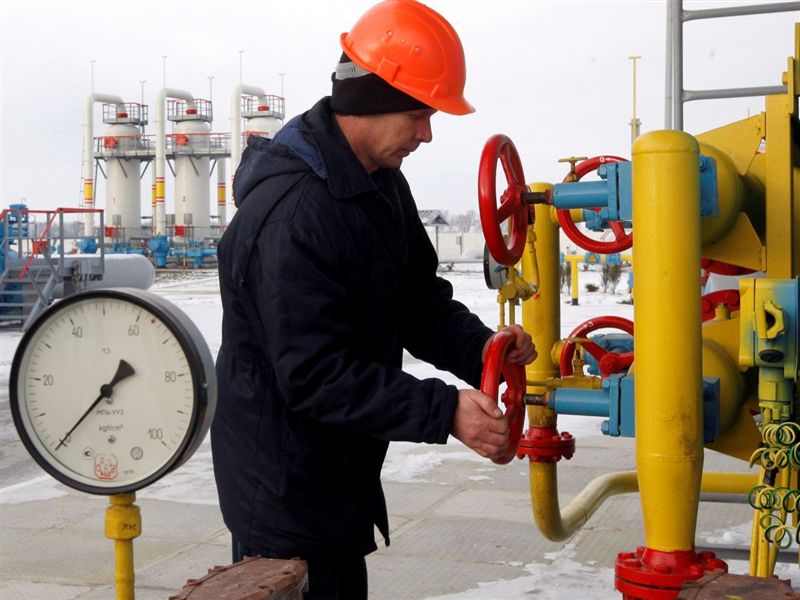
The new president Viktor Yanukovych enjoys a honeymoon with Russia: Ukrainian-Russian cooperation has started booming after previous president Viktor Yushchenko had left office. Ukraine and Russia have agreed on lower gas prices for Ukraine [1], on the Russian Black Sea Fleet staying based in Ukraine till 2042 [2]. Vladimir Putin has even made a sensation by speaking of a possible merger of Russia's Gazprom and Ukraine's Naftogaz [3]. Added to this, there come smaller initiatives to establish cooperation (or to sell relevant Ukrainian assets to Russians) in nuclear power, shipbuilding [4], aviation construction [5], power generation and supply [6].

At the same time, since the times of president Yushchenko Ukraine is an important partner for the largely isolated Belarus. Ukraine remains one of the very few European countries having official political contacts with the authoritarian Belarusian government and the contacts have only intensified with Yanukovych becoming president. Ukraine has recently become the transit country for the important Venezuelan oil supplies [7] to Belarus. In April the Belarusian parliament has finally ratified the border treaty with Ukraine [8], which has been the key issue of Belarusian-Ukrainian relations since the collapse of the USSR.

Relations between Belarus and Russia are currently in a crisis since Russia has imposed duties on oil supplied to Belarus. This came despite establishing a customs union of Russia, Belarus and Kazakhstan at the very same time. The disappointment with absence of progress in the Russian-Belarusian integration have led to Russia unilaterally transforming the relations with Belarus into a more pragmatic and market-based form.

Ukraine could threat Belarus as a new strategic ally for Russia in Europe, for it would be psychologically easier for Russia to impose a hard line on Belarus when it isn't the only faithful satellite on the European continent. On the other hand, Ukraine could potentially act as intermediary between the two. In any case, Ukraine seems to become a more important actor not only in Belarus' relations with the EU, but also in Belarusian-Russian relations.

// http://belarusdigest.com/2010/05/05/ukraine-becomes-more-important-as-a-factor-in-belarusian-russian-relations/
Read more...

January 27, 2010

Nothing personal, just business


My commentary on the Russian-Belarusian oil duties dispute, for Novaja Eŭropa on-line magazine

Let's admit, Belarusian authorities have no effective arguments in the current oil dispute with Russia. Therefore we must accept the fact that they will loose this fight sooner or later. In close future oil will become expensive, the Belarusian economy will face increasing difficulties, and a whole new stage of relations with Russia will come. Nothing surprising - we were going towards this all the past fifteen years.


Nothing to answer with

Note, Russia proposes to continue to charge no export duties for oil supplied for internal Belarusian needs. The new duties will only affect the (bigger) portion of the oil supply which enables the Belarusian state oil refineries to gain excess profits. Thus, it will first strike the rent part of the Belarusian economy which rather benefits from artificial privileges granted by Russia instead of creating a product competitive on the market.

Some Belarusian journalists support the official Belarus' position on the reasonable ground that a customs union, which our countries seem to be building together with Kazakhstan, by definition means removal of customs barriers and not their introduction. Nevertheless, the full terms of the customs union treaty have not yet been published.

In any case, it would be strange to see Belarusian authorities talking of the implementation of signed agreements as long as they themselves are responsible for actual sabotage of so many previously signed agreements - of all those treaties on a common currency with Russia and on integration with it in "unions" and a "union state".

Fundamentally, Moscow has the stronger arguments in the dispute. Belarus, unfortunately, has nothing to oppose Russia's pressure with. In late 2009 Russia launched the first string of the Eastern Oil Pipeline (ESPO), which runs from Russia to China. The construction of the pipeline will be completed in 2014. Russians have diversified markets for their oil, so its price for Belarus and Western Europe will now only grow. Why didn't Belarus, in turn, diversify its sources of energy?


The cursing miracle

Whatever the result of the Russian-Belarusian oil war, lessons for both sides were evident before and will be stressed again.

In a comment to the New Year's greetings by opposition leader Aliaksandr Milinkievič on the website of the newspaper Naša Niva, one reader wrote that he could not imagine this politician holding tough negotiations with the Russians on gas prices.

But as a matter of fact, tough negotiations with Russian monopolists shouldn't have become a New Year tradition for Belarus at all. Latvia, Poland or the Republic of Lithuania do not conduct annual dramatic negotiations with Russia on oil and gas, as they have no preferences and pay the market price. The Czech Republic has even built a gas pipeline from Germany to provide access to Norwegian gas.

To the contrary, the strategy of the Belarusian regime in the last decade has been the exploitation of Russian post-imperial phobias and the struggle for the preservation of politically motivated preferences in regards of oil and gas supplies. Sooner or later it had to end. Playing manipulatory games with the Kremlin is neither perspective nor moral, even though the game has so far been successful for Belarus. Relations between our two countries should be market-based: Nothing personal, just business.

Politicians make reforms only when the absense of reforms threatens the stability in the country more than the changes. Another new year's oil crisis has once again shown that the reforms had to begin a long time ago and that the so-called Belarusian economic miracle of the recent years was in fact a curse for the country. Belarusian authorities have had a major source of cash but the economy could remain unreformed and non-upgraded. Now the cash source disappears but market reforms in Belarus, according to Belarusian businesspeople, still haven't got the proper quality.

Finally, the independence of Belarus means market-based relations with Russia, plus the diversification of energy sources, plus market reforms in the country.


Rebooting relations

The news about Belarus' intention to cut Russian electricity transit to the Kaliningrad region could only have brought you a sad sarcastic smile: the verbal "everlasting brotherhood" of Russia and Belarus has actually turned into open hostility. It is noteworthy that Belarusian authorities have begun to threaten Russia with leaving the just created customs union almost since the very beginning of this conflict.

For Russia the dispute must therefore be another demonstration that any integration initiative can become an arms against Russia in the hands of official Minsk. The Belarusian regime can use every opportunity to accuse the Kremlin of sabotage of the "brotherly integration".

Therefore, both Belarus and Russia need a rigorous audit (and possibly termination) of the empty "unions". Not only is the pathos of the Belarusian-Russian integration untrue, it also discredits the very idea of any constructive relations between our countries for decades ahead.

The hangover from the long-standing pseudo-integration extravaganza will for a long time spoil the athmosphere of Belarusian-Russian contacts. Constructive relations with the largest neighbor are absolutely necessary to Belarus, but they apparently will have to start from scratch. The time for it is coming.

By Alexander Čajčyc

Read original story

Read more...